How to Choose a Nail Artist
To choose a nail artist you can trust, check five things: how instruments are sterilized, what materials she works with, whether the portfolio looks honest, what recent reviews say, and whether the price is suspiciously low. If any one of these raises doubts, keep looking – Israel has plenty of excellent nail techs.
A manicure is about safety as much as beauty: tools touch skin and cuticles, so the cost of a bad choice is higher than a chipped nail. And the choice is huge – salons, home studios, Instagram-only artists – with no one vetting them for you.
Here is how to choose a nail tech step by step, from sterilization to pricing.
Sterilization comes first
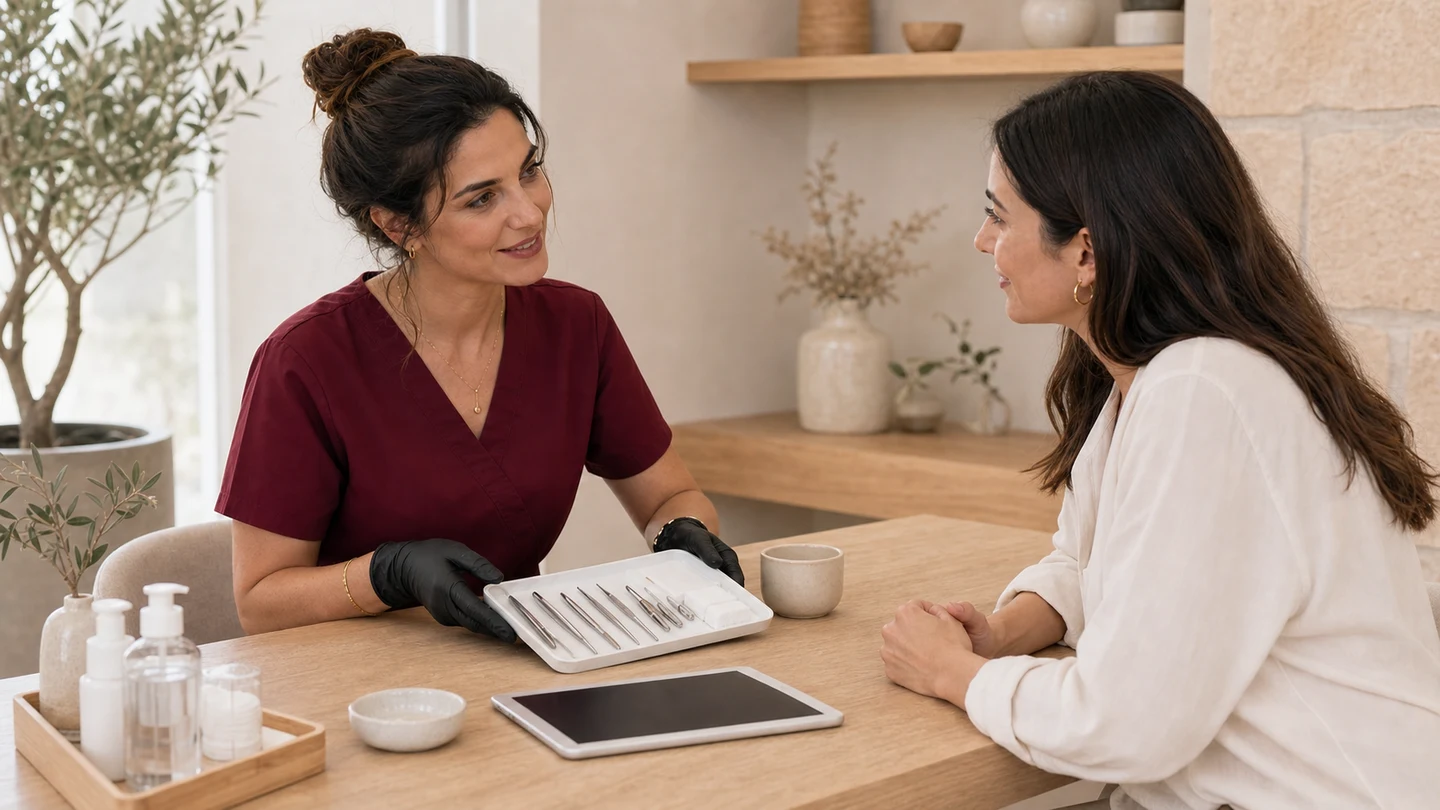
Ask how instruments are processed before you ever book. A confident professional answers calmly and in detail – she has nothing to hide.
Here is what you want to see:
- An autoclave or dry-heat sterilizer – true sterilization. A UV box is only meant for storing tools that are already sterile.
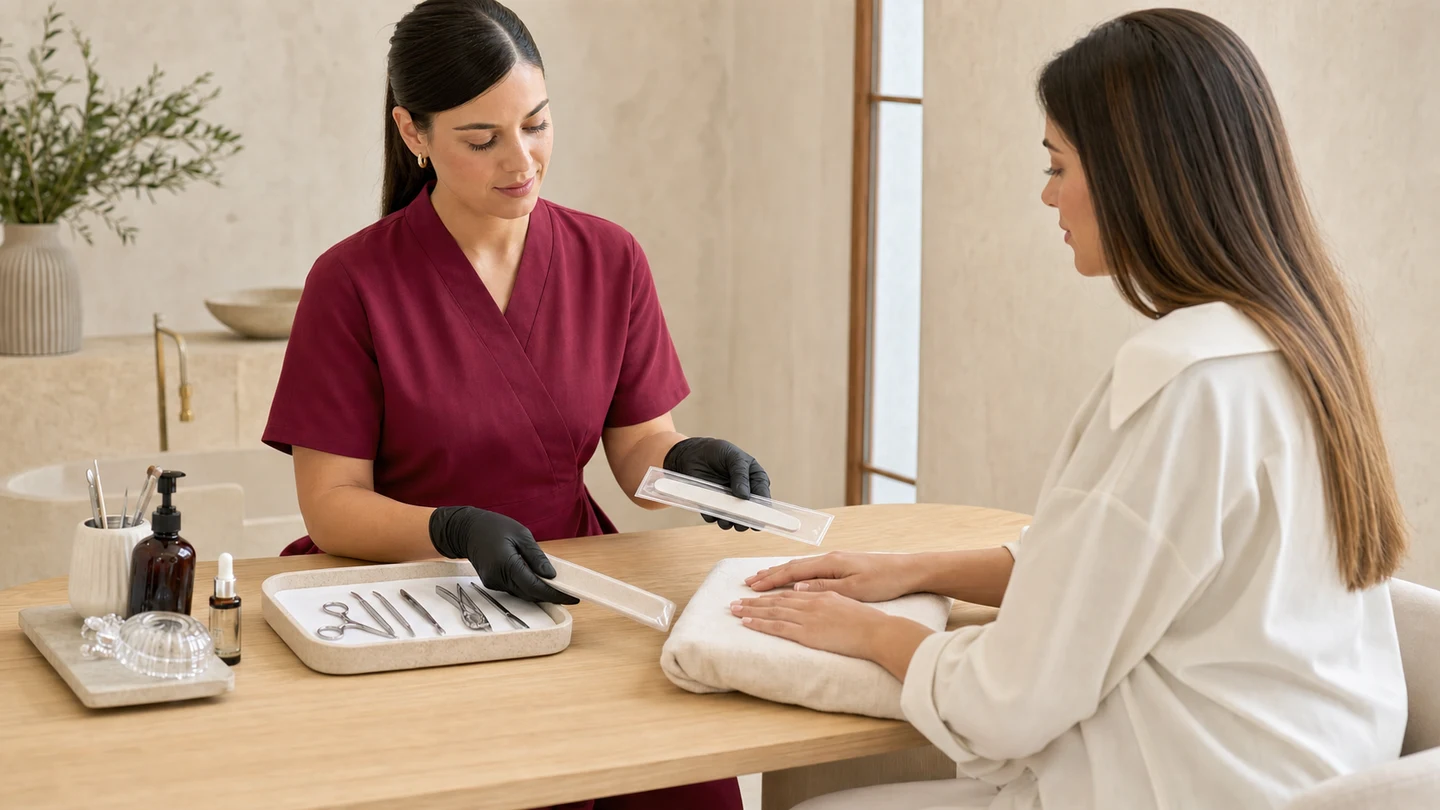
- Kraft pouches opened in front of you: a sealed pouch with a color indicator confirms the tools went through a full sterilization cycle.
- Single-use files and buffers – fresh for every client, or your own personal kit.
- A clean station: a fresh towel or disposable sheet under your hands, gloves, and surfaces disinfected between clients.
If the answer is "wiping with alcohol is enough," that is your cue to leave.
Materials and gel quality
You do not need to know brand names to judge materials – your own hands will tell you:
- The polish should not burn under the lamp beyond mild warmth. A little heat while curing is normal; real burning is not, and a good tech will lower the lamp power or apply thinner layers.
- Quality gel polish wears evenly for two to three weeks – no chips in the first days, no lifting at the cuticle.
- Removal is gentle and leaves the nail plate intact: done with an e-file or by soaking, never by peeling the color off along with a layer of nail.
A good nail artist also asks whether you have reacted to products before and picks a base that suits your nails.
How to read a portfolio
A portfolio says more than any ad – once you know what to look for:
- Photos in natural light, without filters: heavily smoothed images hide flaws.
- Clean cuticles with no cuts right after the service.
- Straight, even light reflections on the surface – a sign of precise leveling rather than bumps and dips.
- Wearable shapes and lengths, not just competition showpieces: what matters to you is the everyday manicure.
Stories are worth a scroll too – they tend to be more candid than a carefully curated feed.
Reviews and communication before booking
Fresh reviews from recent months matter more than hundreds of old ones. Look for specifics: what was done, how long the manicure lasted, how the artist handled requests. Generic lines like "amazing, highly recommend" tell you almost nothing.
Pay attention to the chat before booking as well. Clear answers, a reasonable response time, and a calm explanation of how tools are sterilized usually translate into the same care during the appointment. Irritation at basic questions is a red flag.
Too cheap is a red flag
A suspiciously low price always has a reason. Proper sterilization, fresh materials, and enough time per client all cost money, so that is exactly where corners get cut:
- sterilization – pouches, indicators, and autoclave maintenance are not cheap;
- materials – bases and gels of dubious origin wear worse and cause more reactions;
- time – when slots are too short, rushing, nicks, and skipped steps follow.
An expensive nail tech is not automatically the best one. But if a price sits well below what is typical in your city, ask yourself honestly: what is being sacrificed?
Frequently asked questions
E-file (Russian) manicure or classic – which should you choose?
Both are safe in the hands of an experienced professional. An e-file, or Russian, manicure is gentler on skin and lowers the risk of cuts, while a classic manicure with nippers gives a very clean finish but demands real skill. Many techs combine the two. If you are unsure, describe your skin and let your nail artist choose.
How long does gel polish last?
Two to three weeks on average. After that the polish itself is usually still fine, but the regrowth line near the cuticle becomes visible and longer nails are more prone to breaks. If gel starts lifting within the first few days, something in the application likely went wrong – raise it with your tech.
Should a manicure hurt?
No. Slight discomfort during cuticle work or brief warmth under the lamp is normal; real pain, burning, or cuts are not. Do not push through it for the sake of the result – speak up right away. A professional will adjust her technique, lower the lamp power, or pause without taking offense.
Key takeaways
- Sterilization first: an autoclave or dry-heat sterilizer, plus kraft pouches opened in front of you.
- Good materials do not burn under the lamp and wear two to three weeks without chips.
- Trust portfolios shot in natural light with wearable shapes, not filtered showpieces.
- Recent, specific reviews and pleasant pre-booking communication beat a pretty feed.
- A rock-bottom price almost always means savings on sterilization, materials, or your time.
Finding "your" nail artist is easier when the basic checks are already done for you. The BeYoffi catalog gathers manually verified beauty specialists across Israel, complete with portfolios and reviews, so you can find a verified specialist near you without the endless scrolling.