How to Know a Specialist You Can Trust
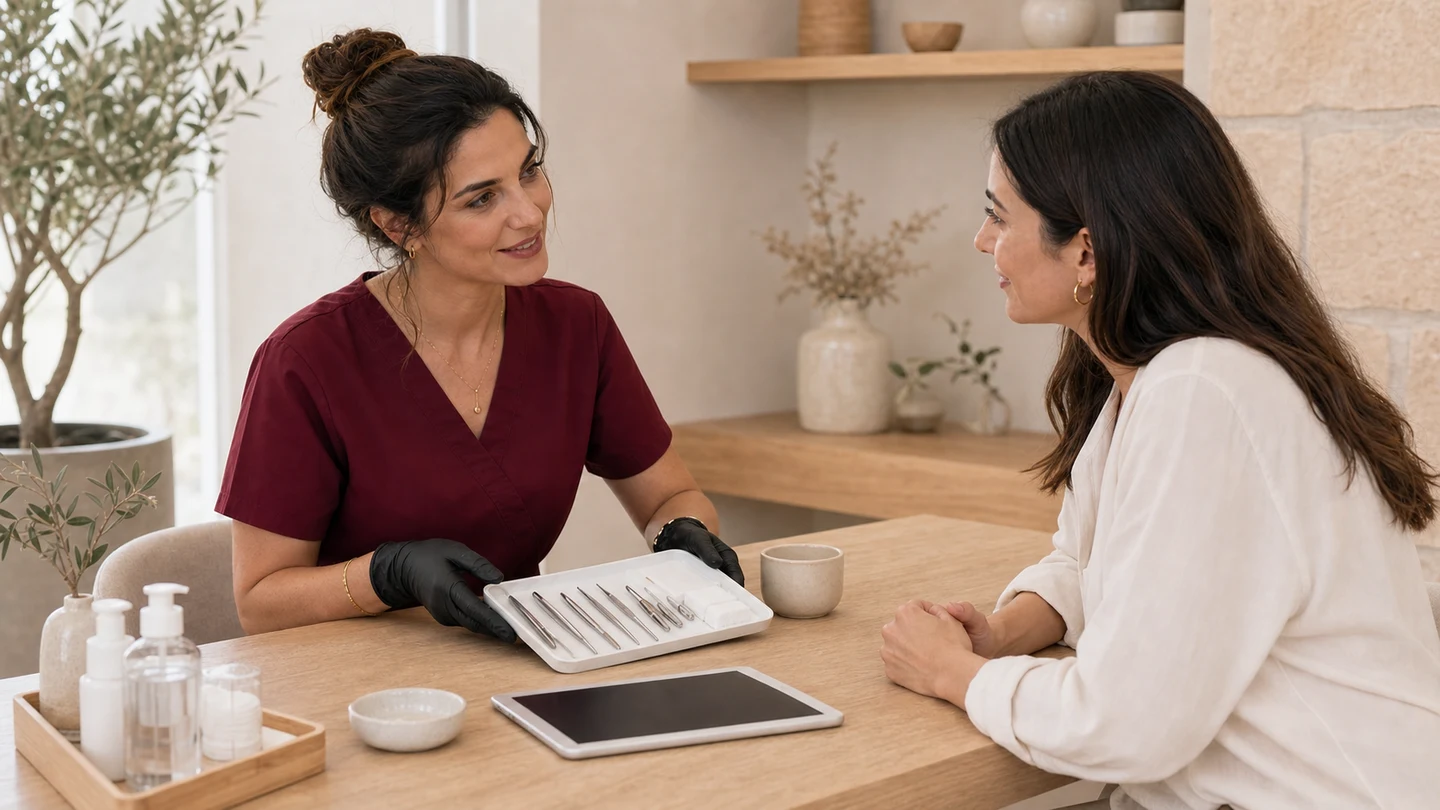
A trusted beauty specialist shows her cards before the treatment: she names prices and steps openly, shares her credentials without getting defensive, answers questions directly, and never promises miracles. Fresh, detailed reviews and a willingness to talk you out of an unnecessary procedure are strong signs too. Choosing carefully saves you time, money, and nerves.
Finding "your" nail tech, lash artist, or cosmetologist always feels like a bit of a lottery – especially in a new city or a new country. But you can turn that lottery into an informed choice: reliable specialists share a set of recurring traits.
Here are six of them – handy for vetting someone new and for double-checking the specialist you already see.
Transparency: Prices, Steps, and Materials
The strongest trust marker: a good specialist explains everything before the treatment instead of making excuses after it. What the work costs and what's included, which steps the procedure involves, which materials and brands she uses, and how long the result should last.
Pay attention to how she answers. A confident professional is specific: "this brand of gel polish, removal is included, a fill in about three weeks." Vague answers like "we'll see how it goes" to simple questions are a reason to pause.
A real bonus is a specialist who flags the fine print herself – a possible surcharge for complex work, or limitations related to your skin or nails. Honesty in small things almost always predicts honesty in big ones.
Diplomas and Ongoing Training
The beauty industry moves fast: materials, techniques, and safety protocols get updated every year. So what matters isn't just a base diploma from a decade ago, but the fact that the specialist keeps learning.
Asking about certificates is completely normal, and a good professional takes the question calmly. Many post their diplomas on their profile or hang them in the studio. The opposite should raise a flag: irritation at a question about training.
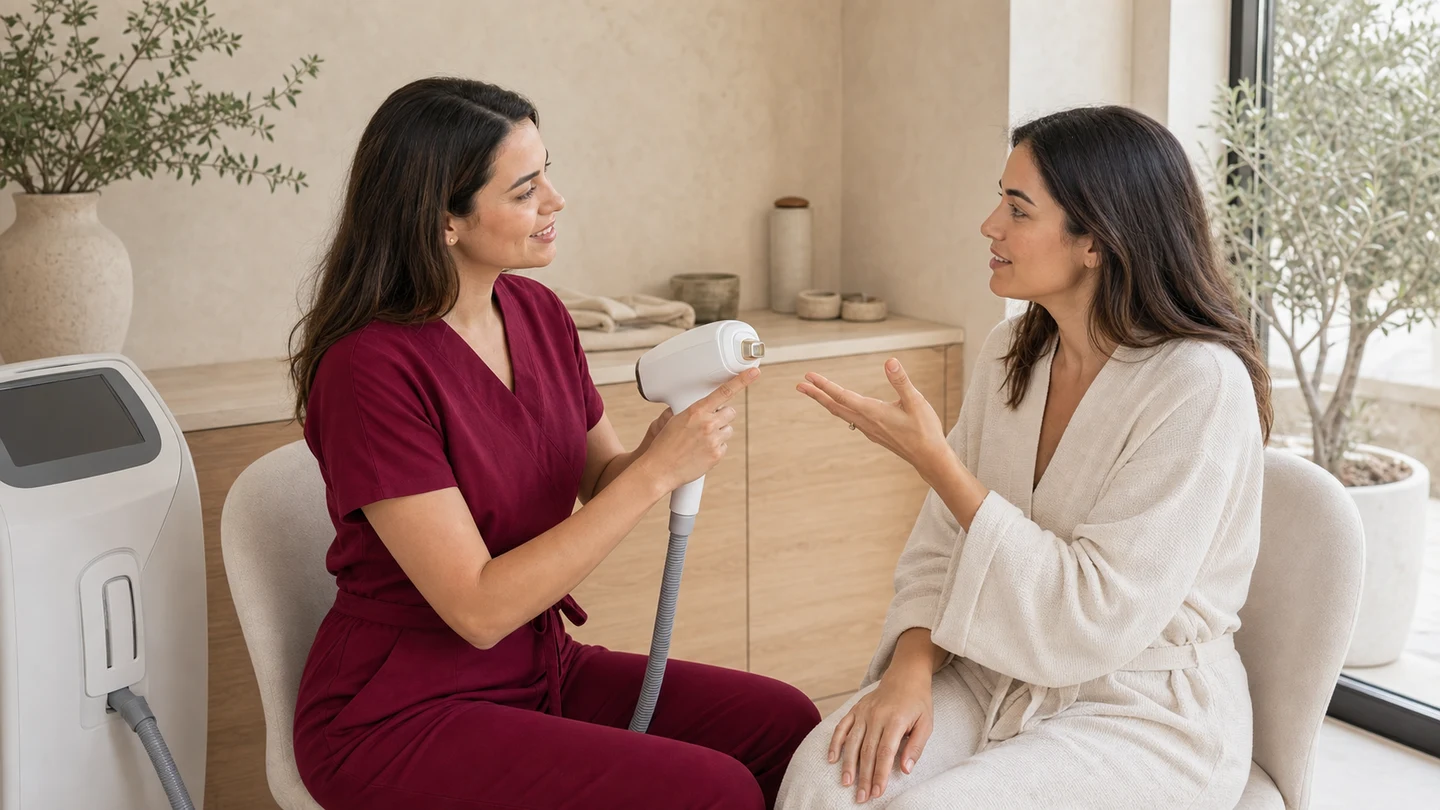
For higher-stakes services – laser hair removal, device-based cosmetology – qualifications are non-negotiable: ask where she trained to work with that specific equipment.
Communication Before You Book
The first messages already tell you a lot. A reliable specialist answers to the point: she clarifies what you want, gives realistic timelines, and is upfront about duration and limitations.
Red flags at this stage:
- pressure tactics: "book today, the price goes up tomorrow";
- promising results "guaranteed, for everyone";
- refusing to answer questions about materials or sterilization;
- rudeness or a condescending tone – it won't improve after you've paid.
A good specialist isn't afraid of "losing" you over questions. Quite the opposite: an attentive client is an easier client.
Reviews: Reading Between the Lines
Reviews only help if you read them carefully. Look at three things: how recent they are, how specific they are, and how the specialist responds to criticism.
- Recency: reviews from the past few months matter more than a glowing archive from two years ago.
- Specifics: a genuine review describes details – which treatment, how long the result lasted, how the touch-up went.
- Response to criticism: a calm reply to a complaint ("sorry this happened, let's fix it") says more about a specialist than ten enthusiastic reviews.
Uniformly ecstatic, detail-free reviews are themselves a reason to look closer: real clients don't write like that.
A Good Specialist Can Talk You Out of It
The single strongest sign of trust is a specialist who talks you out of a procedure. Who says extensions would damage your natural lashes right now, that your nails need a break, or that no technique will deliver the effect you're picturing.
That refusal means something simple: your long-term result matters to her more than a one-time sale. Specialists who say yes to everything earn from a client once. Specialists who can say "you don't need this" keep clients for years.
If someone offers you a simpler alternative or advises you to wait – you've probably found your specialist.
Why Verified Platforms Matter
Vetting every specialist manually – diplomas, reviews, whether the photos are real – takes serious time. Verification platforms take on part of that work: they confirm a profile belongs to a real, practicing specialist and that reviews come from actual clients.
That doesn't replace your own judgment, but it noticeably lowers the risk: you choose among specialists whose details have already been checked, and compare them by the same criteria – experience, services, reviews. It's especially helpful after a move, when you don't yet have recommendations from friends.
Key takeaways
- A trustworthy specialist explains prices, steps, and materials before the treatment – no dodging.
- Diplomas and recent certificates are the norm; irritation at the question is a red flag.
- Read reviews between the lines: specifics and responses to criticism beat a raw star rating.
- Willingness to talk you out of an unnecessary procedure is the strongest sign of professionalism.
- Verified platforms save time and lower the risk of an unpleasant surprise.
If you'd rather not vet everyone yourself, start with BeYoffi's catalog: you can find a verified specialist there – with a checked profile and reviews from real clients.