Gel Polish or Builder Gel: What to Choose
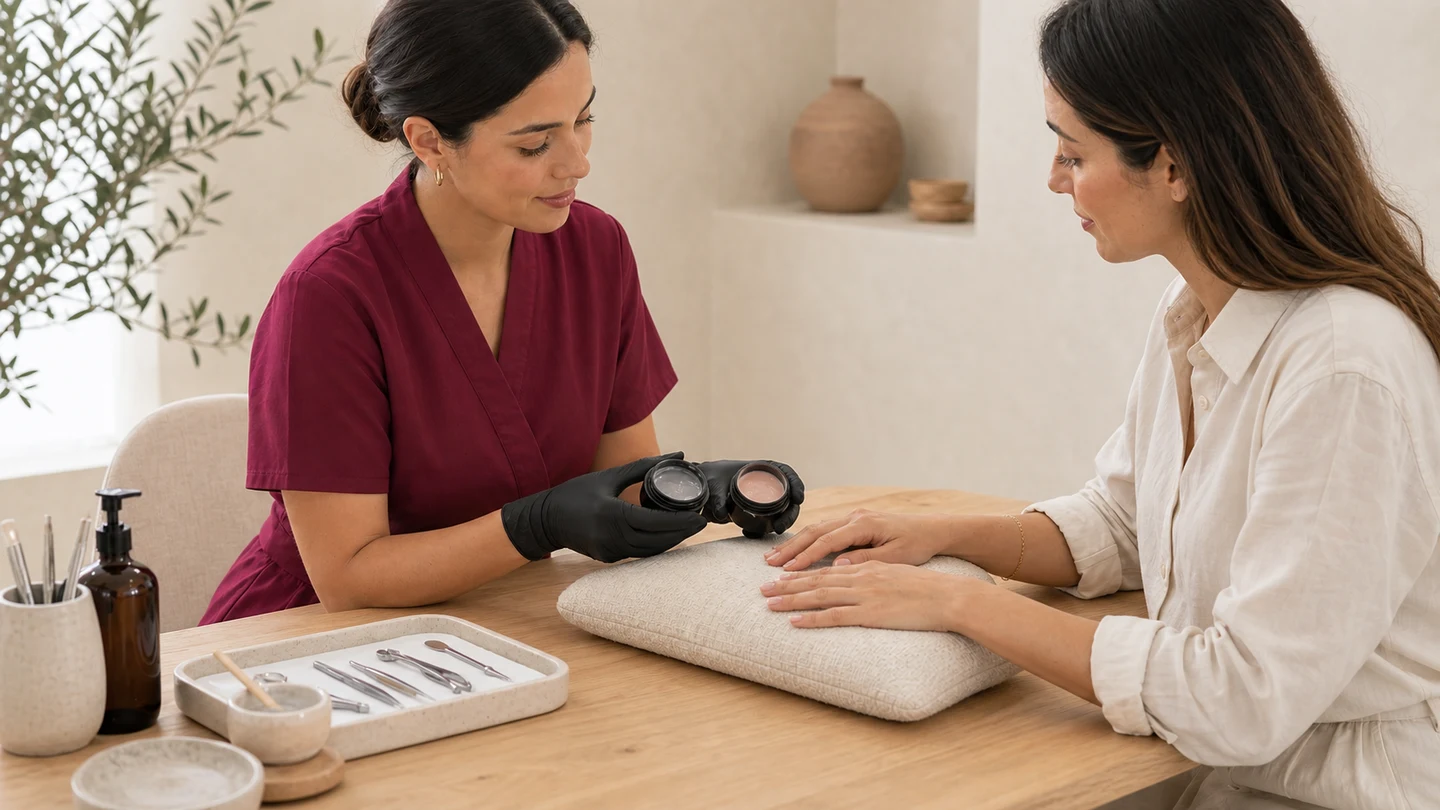
Gel polish is a thin, durable color service for nails that do not need extra structure. Builder gel creates a denser layer that can refine the shape and support nails under more length or daily stress. Both are commonly refreshed every two to three weeks, but the better choice is not simply the “stronger” product – it is the one that suits your natural nails and routine.
The names can sound almost interchangeable on a service menu, yet the difference is easy to feel: thickness, appointment time, removal and day-to-day wear are not the same. Here is a plain-language comparison of when gel polish is enough, when builder gel is useful and why reinforcement is not a medical treatment for the nail.
The basic difference
Gel polish combines color with longer wear. The artist applies thin layers over a prepared natural nail and cures each layer under a lamp. It keeps its shine and resists chips better than traditional polish, but it does very little to change the architecture of the nail.
Builder gel is more substantial. An artist can place extra material where the nail needs support, smooth an uneven surface and create a balanced curve. It can stay in a natural shade or sit underneath your chosen color.
| Feature | Gel polish | Builder gel |
|---|---|---|
| Thickness | Thin | More structured |
| Main purpose | Color and wear | Shape and added support |
| Best length | Short to medium | Medium, sometimes with a small repair |
| Removal | Soak-off or gentle filing, depending on the base | Usually filed and rebalanced during a fill |
| Appointment | Shorter | Longer because the shape is built |
When gel polish is enough
A thin coating is often the best fit when your nails:
- are short or medium and hold their shape well;
- do not bend under normal daily use;
- rarely split at the side walls;
- do not need significant surface correction.
Gel polish works well if you like a natural feel and change colors regularly. It should not become a thick stack of products. If several heavy layers of rubber base are being added to every nail, it is reasonable to ask what problem that extra material is solving.
When builder gel can help
Builder gel may be more practical for longer nails, naturally flexible plates or nails that repeatedly crack in the same stress area. A balanced structure spreads everyday pressure and can help you keep an even length.
The word “strengthening” can be misleading, though. The product provides mechanical support while it is on the nail; it does not make the natural plate healthier from within. If your nails have suddenly become very brittle, changed color or started lifting from the nail bed, covering the change with gel is not the right first step. Find out why it is happening instead.
How it should feel
Well-built gel does not need to look bulky. The highest point sits where the nail needs support rather than at the cuticle or tip, and the free edge stays neat enough for normal tasks.
Tell the artist immediately if you feel heaviness, pressure or product touching the skin. You do not need to silently endure intense heat in the lamp either: the hand can come out briefly and the curing approach can be adjusted.
Maintenance and removal
Both gel polish and builder gel are usually refreshed every two to three weeks. As the nail grows, the structure moves forward. Even if there are no visible chips, the old balance can place more leverage on the free edge.
The essential removal rule is never peel the product off. Peeling can lift the upper layers of the natural nail along with the coating, leaving it thin and tender. A suitable soak-off gel can be dissolved; harder builder products are normally filed down carefully, often leaving a thin protective base for the next fill.
Practical safety
Before the service, check that reusable tools have been processed and that single-use files are fresh. The cuticle does not need aggressive trimming; it helps protect the nail-growth area.
Gel lamps use ultraviolet light. If you want extra protection for the skin on your hands, apply broad-spectrum, water-resistant SPF 30+ in advance without coating the nails, or wear dark opaque fingerless manicure gloves. Itching, swelling, blisters around the nails or persistent lifting after a service are not normal wear: have the product removed and seek advice from a dermatologist.
Common questions
Can builder gel repair one broken corner?
Often, yes. A small corner or short free-edge repair can be rebuilt with a structured material. Creating significant extra length is a separate extension service with different maintenance needs.
Do nails need a break between services?
Nails do not “breathe,” but a break makes sense if the plate has been thinned by rough removal, feels sore or the surrounding skin has reacted. What helps is not simply being color-free; it is giving the damaged section time to grow out without more trauma.
Which one lasts longer?
Builder gel usually tolerates mechanical stress better, but that is not a reason to wear it for a month. The right fill date depends on growth and balance, not only on whether the color still looks intact.
The essentials
- Gel polish is a thin, long-wear color for nails that already have enough natural structure.
- Builder gel adds shape and support for length, flexibility or repeated stress cracks.
- Reinforcement does not treat the natural nail or hide changes that need attention.
- Both services usually need maintenance every two to three weeks and should never be peeled off.
- Comfort, hygienic work and careful removal matter more than the product name on the menu.
The best decision is made after seeing your bare nails, not from an inspiration photo alone. On BeYoffi, you can find a verified nail artist, inspect close-up work and ask what products and removal method they use before booking.