After a Facial: The First 48 Hours
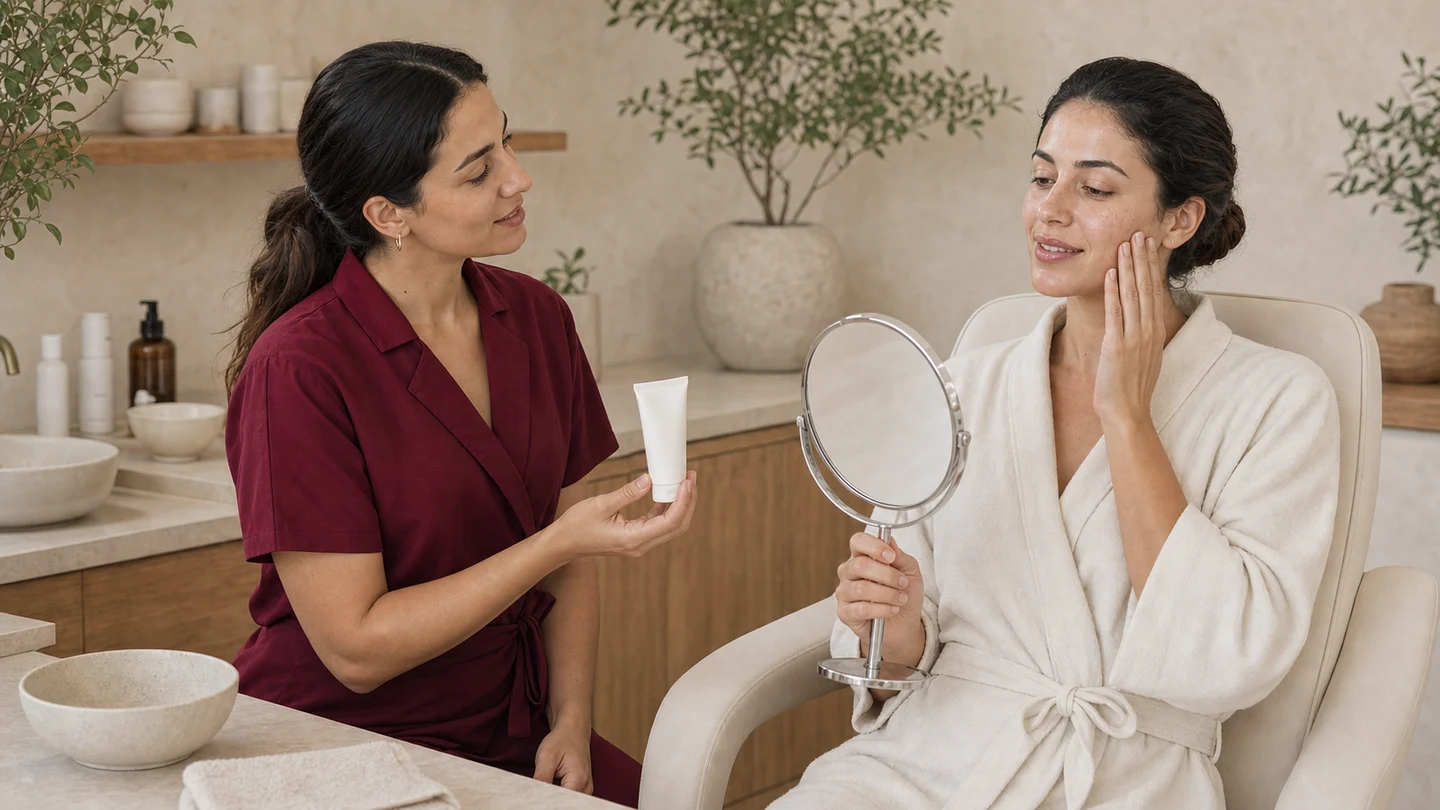
For the first 48 hours after a facial – or any other cosmetology treatment – your skin has one job: to recover in peace. Three things help: gentle cleansing without acids or scrubs, solid hydration, and SPF every day. Everything active – retinol, acids, workouts, sauna, makeup on day one – goes on pause.
This rule holds after most treatments: deep cleansing, peels, device-based procedures, injections. The exact protocol depends on the treatment and your skin, so your specialist's instructions always outrank general advice. Here is what happens to the skin during these two days and how not to get in its way.
Why skin needs the pause
Almost any treatment is a controlled stress on the skin. A deep cleanse opens pores and disturbs the surface layer, a peel removes part of the stratum corneum, devices heat or micro-injure the tissue – that is precisely what triggers renewal.
In the first hours afterwards the skin barrier is weakened: skin loses more moisture and reacts more strongly to sun, cosmetics and bacteria. Mild redness, tightness and patchy flaking in the first days are a normal part of the process, not a complication.
The first 24 hours
On day one the rule is simple – as little as possible:
- do not touch your face and do not squeeze anything, even if it is "asking for it";
- skip makeup – foundation on freshly treated skin means extra bacteria and clogged pores;
- postpone workouts, sauna, hammam, pool and very hot showers: sweat and steam irritate the skin;
- wash with cool water and a mild cleanser without acids or scrubs, and pat dry with a clean towel;
- in the evening, use only the moisturizer your specialist recommended – or your simplest usual one.
If your specialist gave you a specific list of restrictions, it takes priority: treatments of different depths have different protocols.
Day two
By day two the skin is usually calmer and you can carefully expand the routine: your usual gentle cleansing morning and evening, a hydrating serum or cream and, if you like, light makeup – provided the skin is not irritated and your specialist has not said otherwise.
Still off the table: scrubs, acid toners, retinol, alcohol-based lotions and facial self-massage. Moderate workouts are usually fine again – go by how your skin feels and what your specialist advised.
SPF – the one non-negotiable
Sun is the main risk after any treatment, and in Israel it is active all year round. Weakened skin reacts to UV faster, and the price of a mistake is pigmentation spots that take months to fade.
So for at least a week after the treatment: SPF 30–50 every morning, reapplied during the day if you are outdoors, plus a hat and shade during peak hours. The beach and tanning beds in the first week are a bad idea, even with sunscreen.
When to bring actives back
Acids, retinol and other strong ingredients come back gradually, usually after 5–7 days – once the skin is completely calm: no redness, flaking or discomfort. Start with one product a couple of times a week and build up slowly.
After deeper peels and device treatments the timelines are longer – your specialist sets them. When in doubt, asking beats guessing.
What should raise a flag
Normal for the first days: moderate redness, tightness, a few post-cleanse breakouts, light flaking. All of it resolves on its own within days.
Message your specialist if redness intensifies instead of fading, or if swelling, itching, a rash, pustules or pain appear. With a strong reaction – swelling, fever, a fast-spreading rash – you need a doctor, not a chat thread.
Frequently asked questions
When can I wear makeup again?
Usually from day two, if the skin is calm and your specialist has not said otherwise. On day one it is best to skip makeup entirely – especially foundation.
Can I train the next day?
Light to moderate exercise – usually yes. Intense, sweaty sessions are better left for day three: sweat irritates recovering skin.
My skin is flaking – should I apply something special?
Moisturizer and SPF are enough. Do not pick at flakes or scrub them off – that is a fast route to pigmentation. If the flaking is heavy or lasts, message your specialist.
Key takeaways
- First 24 hours: no makeup, sport, sauna or hot water; only gentle cleansing and hydration.
- From day two, return to your usual mild routine – still no acids, retinol or scrubs.
- SPF 30–50 every morning for at least a week is your main defense against pigmentation.
- Actives come back after 5–7 days, once the skin is completely calm.
- Growing redness, swelling, itching or pustules – message your specialist, do not wait it out.
Good aftercare starts with a treatment done carefully and for the right reasons. On BeYoffi, you can find a verified cosmetologist, read reviews and discuss aftercare for your skin before you book.